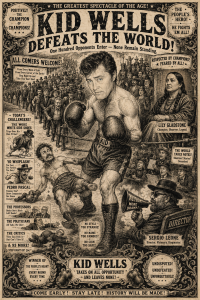
I’ve no way of knowing how real this makeup is, but…
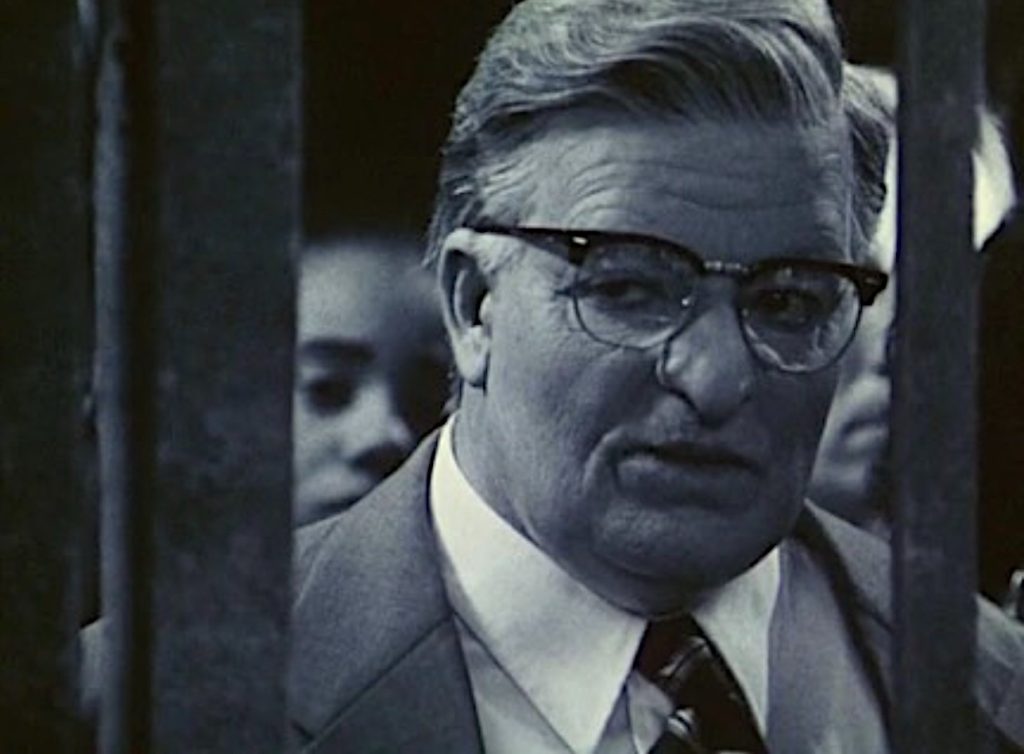
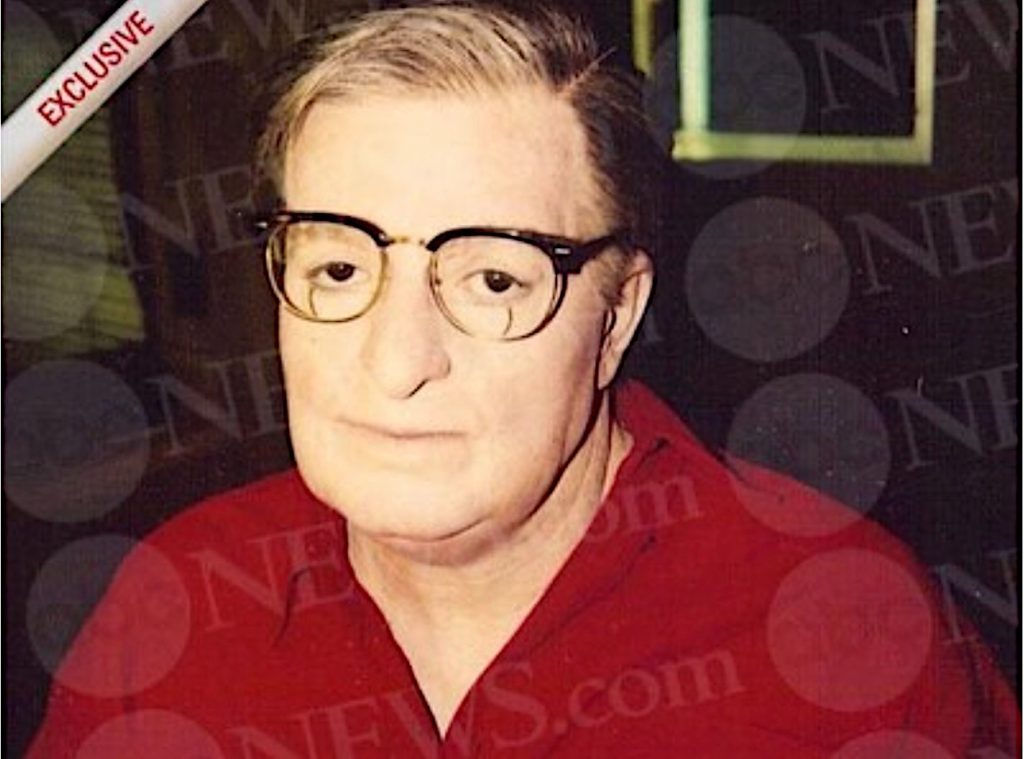
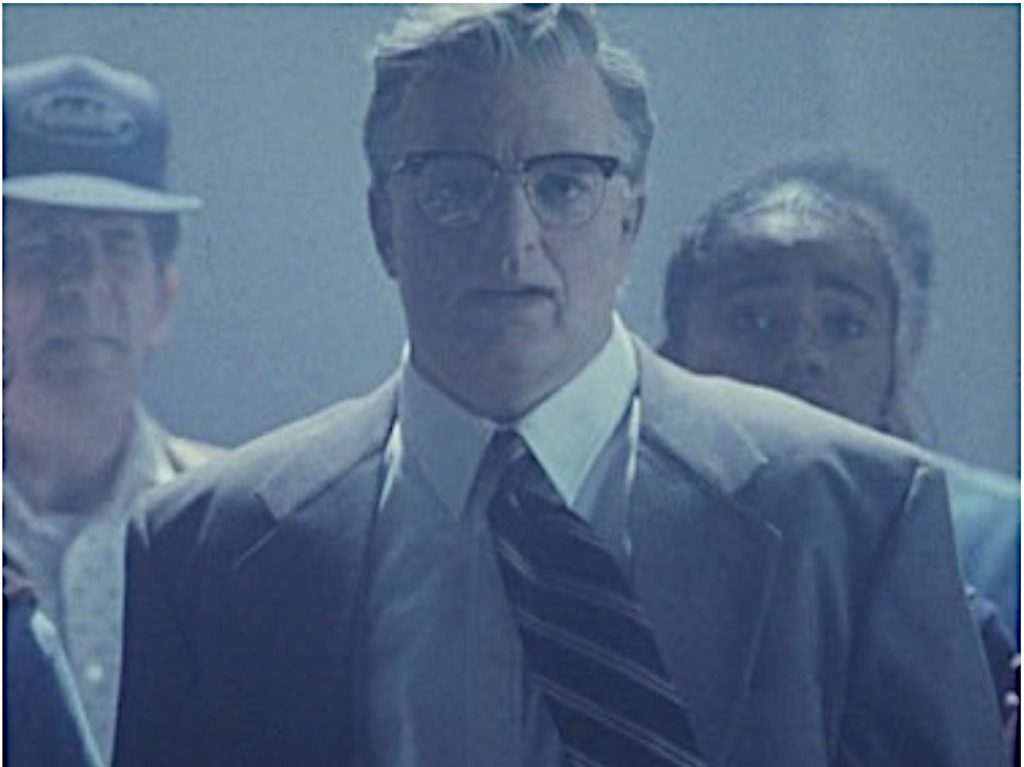

I’ve no way of knowing how real this makeup is, but…
FULL SPOILER ASSESSMENT: I won’t be seeing Rod Lurie‘s Lucky Strike until tomorrow afternoon, but I’m told that while the surviving-alone-during-the-Battle-of-the-Bulge part is fine, Lurie and co-screenwriter Marc Frydman have inserted or added on a virtue-signalling denouement involving a character played by Aunjanue Ellis Taylor, and that this argues with the social-cultural battleground reality. Maybe. We’ll see.
Variety review: “And when the movie finally does make its plea for relevance, which hinges on the life-saving importance of Scott Eastwood‘s Motorola FM radio, it seems to come out of another film entirely — namely, Hidden Figures (2016), with its homage to the diversity of unsung scientists.
“Lucky Strike presents Lurie the war-film director in miniature, and there’s no shame in that. But what the film suggests is that he shouldn’t be shying away from the combat maximalist inside him.”
EXTRA DOUBLE TRIPLE SPOILER WARNING: How the hell could Aunjanue Ellis Taylor fit into this December 1944 Bastogne scenario, given that female POCs were nowhere close to the action? Well, her “Mrs, Caldwell” character is not in Europe, for one thing. We’re told that she was a super-bright woman who designed the Motorola FM radio that ultimate saves Eastwood’s life, and so after the war he drops by to pay his respects and, to show his gratitude, helps her with a pension problem.
But this mostly seems like another movie. A tack-on. It’s one of those denouements that says “the official movie is over, and this is the surprise twist at the end.” And yet Lucky Strike is based on an allegedly true story that a teenaged Frydman got from a WWII veteran…straight from the horse’s mouth.
I’m very much looking forward to enjoying the meat of Lucky Strike. The violent action and evasion stuff in the bitter Bastogne cold, I mean. I’ll file as soon as I can tomorrow afternoon or evening.
Jesse Eisenberg‘s The Debut (A24) is an upcoming American musical comedy about Mona (Julianne Moore), an older stage actress struggling to do her best in a community theatre production of a musical, but under the yoke of a demanding director (Paul Giamatti)). The trailer shows dance moves and a small team of musicians, but not a single sung note is heard. And yet it’s obviously a first-rate film.
Costarring Eisenberg, Halle Bailey, Havana Rose Liu, Colton Ryan, Lilli Cooper, Maulik Pancholy and Bernadette Peters.
It was announced today that Cristian Mungiu‘s Fjord, the deftly served social-political drama that won the Cannes Film Festival’s Palme d’Or last month, will open stateside on Friday, October 9th — a prestige film clearly looking at award-season consideration.
Cosstarring Sebastian Stan and Renate Reinsve as a strictly religious couple-with-kids who fall under woke scrutiny and legal prosecution when they move to a small Norwegian village, will instantly and indisputably become a leading nominee for Best Int’l Feature Oscar.
Mungiu’s film will also be subjected to relentless side-eye treatment from woke critics who will try to “take it down”, sppo to speak — a death-of-a-thousand cuts diminishment campaign that won’t involve angry attacks as much as a dismissive chip-chip-chisel-chisel strategy. They’ll do what they can to kill Fjord by calling it well made but lacking dramatic oomph, low-key, “doesn’t take sides”, etc.
All the big reptilian woke lawyers — Richard Brody, Justin Chang, Jessica Kiang, Manohla Dargis, David Ehrlich, Richard Lawson, Wesley Morris….they will all go after Fjord with fine scalpels because — this is key — this brilliant film is not so much a portrait of a progressive community trying to subject a conservative couple to the political lash as a larger-canvas indictment of international woke Stalinism.
The Critical Drinker, Kyle Smith and Armond White will almost certainly adore this film. Uh-oh…saying stuff like this will only get Fjord into more trouble!
In the immediate wake of Cristian Mungiu‘s Fjord winning the Cannes Film Festival’s Palme d’Or on 5.23.26, woke-mob pushback was voiced by respected film critic B. Ruby Rich in a 5.24 Facebook post.
Rich passed along a second-hand observation (originally shared, she said, by “an esteemed U.S. curator”) that called Fjord “the MAGA film.”
Three days later came another shot across the Fjord bow, this time from identity-driven New Yorker critic Justin Chang.
In a 5.27 piece titled “All the Films in Competition at Cannes 2026, Ranked from Best to Worst“, Chang dismissively ranked Fjord, the festival’s only home-run knockout in my view, as the 11th best film he saw in Cannes, while snooting the following sentence: “More than a few wondered if Mungiu, whose Romanian-set films have forcefully criticized religious fundamentalism, had suddenly moved rightward as his camera drifted west [to Norway].”
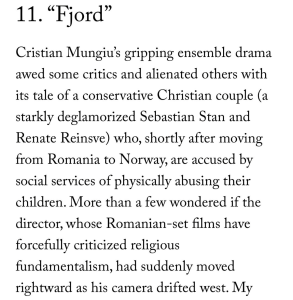
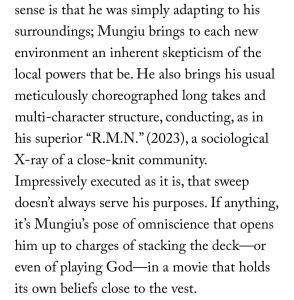
HE interjection: “More than a few” alludes to the same people B. Ruby Rich and her “esteemed U.S. curator” had been chatting with in Cannes. The notion that Mungiu’s social-political perceptions may have “suddenly moved rightward” is an oblique, carefully phrased, typically Chang-ian way of saying Mungiu’s thinking (on this film at least) may have gone MAGA.
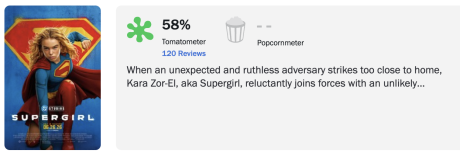
Craig Gillespie‘s Supergirl (Warner Bros., 6.26) has landed a 58% Rotten Tomatoes rating. We all know what this means. It means that it effing stinks.
Excerpted from Owen Gleiberman‘s Variety review:
“Kill Krem! Save the dog! Those are the motivations driving the entire not-even-interesting-enough-to-be-convoluted plot of Supergirl. Maybe that’s why the movie is full of action yet numbingly flat.
“There was one thing about last year’s Superman that perhaps the whole world could agree on: In that 12-minute-long argument between Clark Kent and Lois Lane (mostly a very good scene), the moment when Clark made the case that Superman’s wholesome valor was ‘punk rock’…well, that was cringe. The second you call anything ‘punk rock’, it has ceased, in that moment, to be ‘punk rock.’ It has instead become lame.”
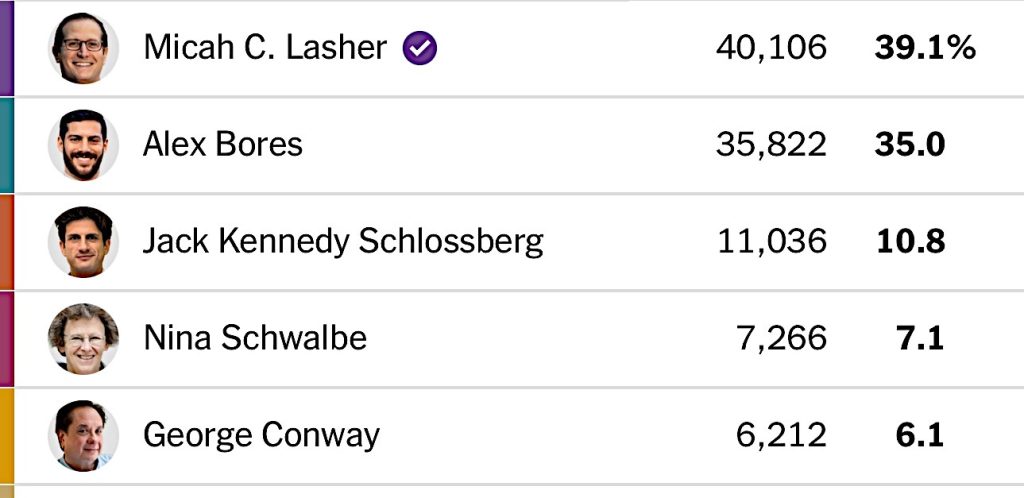
And yet poor George Conway, the virulent anti-Trumper and news show commentator who’s made of much sterner stuff than Schlossberg, finished even lower….fifth place!
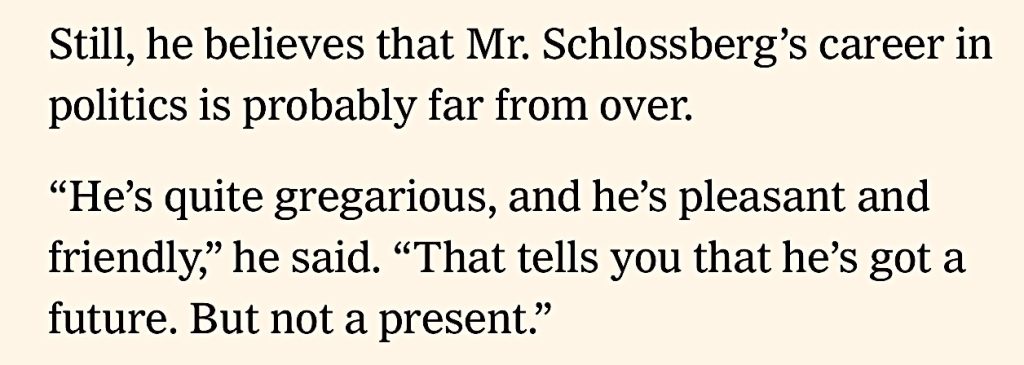
Best post–election Schlossberg assessment:
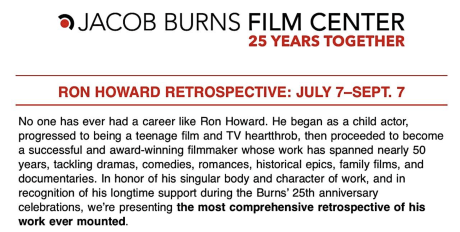
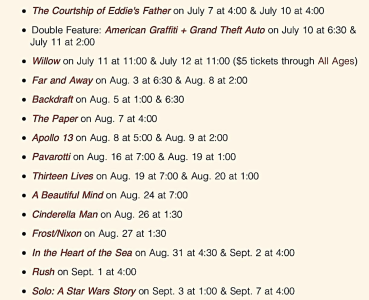
The career of Ron Howard is being tributed his summer at the Jacob Burns (July 7th thru September 7th). Howard, a Greenwich resident, will drop by for a sitdown session or two.
Nobody believes that Howard is a major auteur-level helmer, but he’s certainly been an assured director of “Ron Howard films” on an off-and-on basis, and there’s no disputing that for roughly 20 years he found a commendable groove with the making of his six finest features — Parenthood (’89), The Paper (’94), Apollo 13 (’95), A Beautiful Mind (’01), Cinderella Man (’05) and Frost/Nixon (08).
Apollo and Mind are still his top two, I believe.
And let’s not forget Thirteen Lives (’22), which is rather good. Seven high achievers in all.
Not bad in a family-friendly, light-hearted way…dopey, emotionally winning, agreeable, fable-ish: Night Shift, Splash, Cocoon, Gung Ho, The Dilemma.
Flawed, annoying: The Missing, Rush, In The Heart of the Sea, Hillbilly Elegy, Eden.
Howard stinkers: Solo: A Star Wars Story, Willow, Backdraft, Far and Away, Ransom, The Da Vinci Code, Angels & Demons, How The Grinch Stole Christmas.
How does a reader square upbeat reactions to Luca Guadagnino‘s Artificial, reported by Variety‘s Ellise Shafer and Alex Ritman, with mixed reactions passed along by “Page Six Hollywood’s” Tatiana Siegel?
Variety: “Prior to being dropped by Amazon, Artificial already had several test screenings, which went down very positively, and screened for other studios on Thursday. According to an insider who has seen the movie, the characters of Sam Altman and Elon Musk are the least sympathetic and the ones audiences would ‘like the least’. It’s also understood that Amazon had seen all the early iterations of the script, before Guadagnino boarded the project.”
From Siegel’s piece, posted on 6.23.26 at 9:45 am:
Old news but once more with feeling: Sam Mendes’ The Beatles – A Four-Film Cinematic Event, which won’t open until 4.7.28 or a bit less than two years hence, has already sunk itself with the almost surreal casting choices, the common factor being that the four lads are played by a quartet of way-too-old guys.
If you don’t know the difference between guys in their early to mid 20s and dudes in their early to mid 30s, I can’t help you.
One, the just-shy-of-middle-aged, clearly-no-spring-chicken-ish Paul Mescal (30 going on 38) playing the 21 year old Paul McCartney during the February ‘64 Beatles arrival, the mid ’60s Rubber Soul / Revolver era and the Abbey Road finale blah blah. (Not to mention Mescal’s impossible hawk nose and pointy chin-chin.) Two, the zero-resemblance-factor, close-to-ginger-haired Joseph Quinn, 32, as George Harrison, the baby of the group in real life. Three, the warlock-eyed Barry Keohgan, 34, as the decade-younger Richard Starkey (born in July 1940, 23 in early ‘64). Four, the basketball-player-sized Harris Dickinson as the five-foot-tennish John Lennon.
Except Caine isn’t doing the actual reading — an AI “voice replica’ is handling that chore.
AI Caine’s reading of Homer’s “The Odyssey” surfaced early this morning (Tuesday around 1 am). Obviously orchestrated by Chris Nolan, Caine being a Nolan loyalist for the last 20-odd years.
Boilerplate: “Nolan’s cinematic adaptation of Homer’s The Odyssey traces the iconic story of Odysseus as he journeys home after the fall of Troy.
“Along the way, Odysseus faces shipwrecks, mythical creatures, vengeful gods, and impossible trials that test his courage, loyalty, and determination. From the Cyclops and the Sirens to the island of Calypso, each step of the journey brings him closer to home while threatening to keep him away forever.
“First composed nearly 3,000 years ago, ‘The Odyssey’ remains one of the most enduring stories in world literature and continues to inspire readers, writers, and storytellers around the world.
“‘The Odyssey’ is an original audiobook by ElevenProductions. It brings the story to life in the official AI voice replica of Sir Michael Caine with a full cast performance of character voices, original music, and sound effects, all created using ElevenLabs AI audio models.
“‘The Odyssey’ is available for free today, exclusively on ElevenReader.”
…it certainly resolves certain matters. Getting hit clarifies things. In my early 20s a guy I was arguing with punched me hard in the jaw, and in the wake of this I distinctly recall saying to myself, “Whoa…that kinda hurt…I’d better zip it for the time being.” This was my only significant jaw-slug.
I remember jogging behind a chubby girl during a 1970 anti-war demonstration in Washington, D.C., and flinching hard when a belligerent, barrel-chested cop ran up and walloped her across the chest and stomach with a baseball-bat-sized billy club. She sharply yelped…”aagghh!” I was deeply affected by that.
Ditto watching a high-school fight in a parking lot. The guy who won was victorious in less than ten seconds. It was over like that.
In 11th grade I was slapped two or three times by a pretty drunk girl…she really whacked me. And I didn’t mind because she was basically saying that she felt strongly about me. She became even more enraged when I reacted casually and impassively, like Lee Marvin reacting to getting slapped by Angie Dickinson.