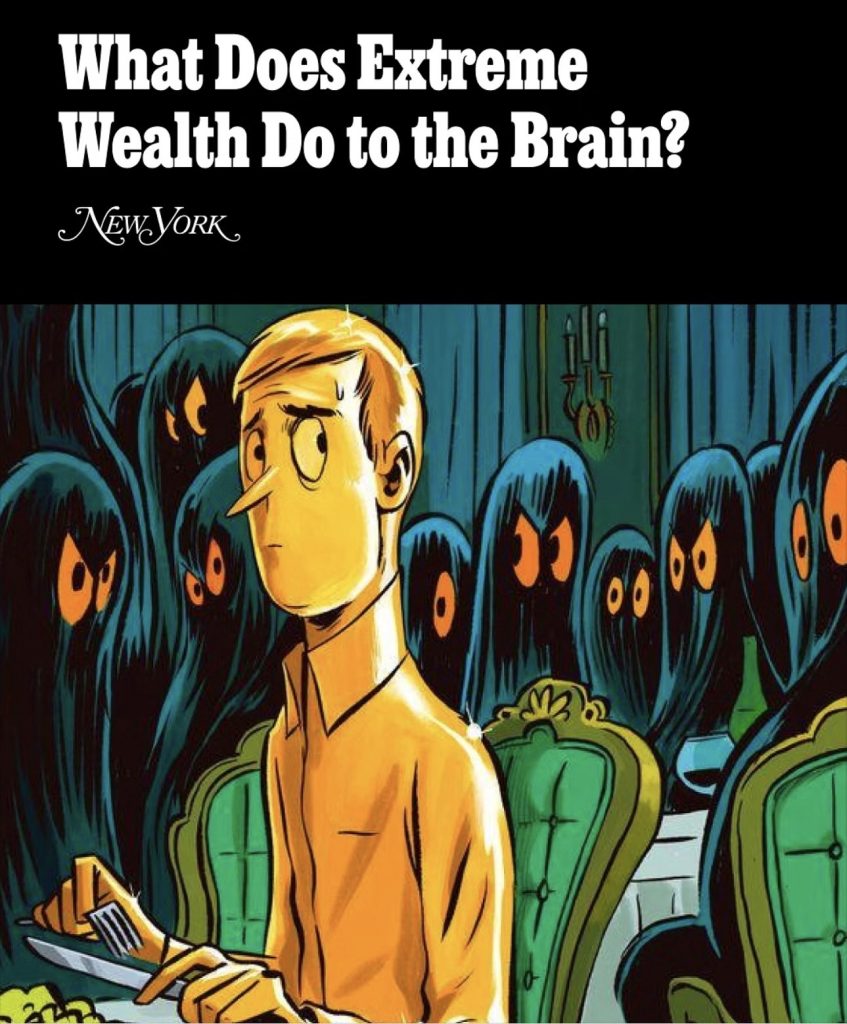
But I can guess. The illustration obviously says it all.

 Jeffrey Wells
 But I can guess. The illustration obviously says it all.
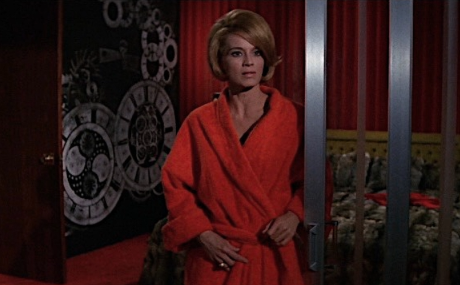
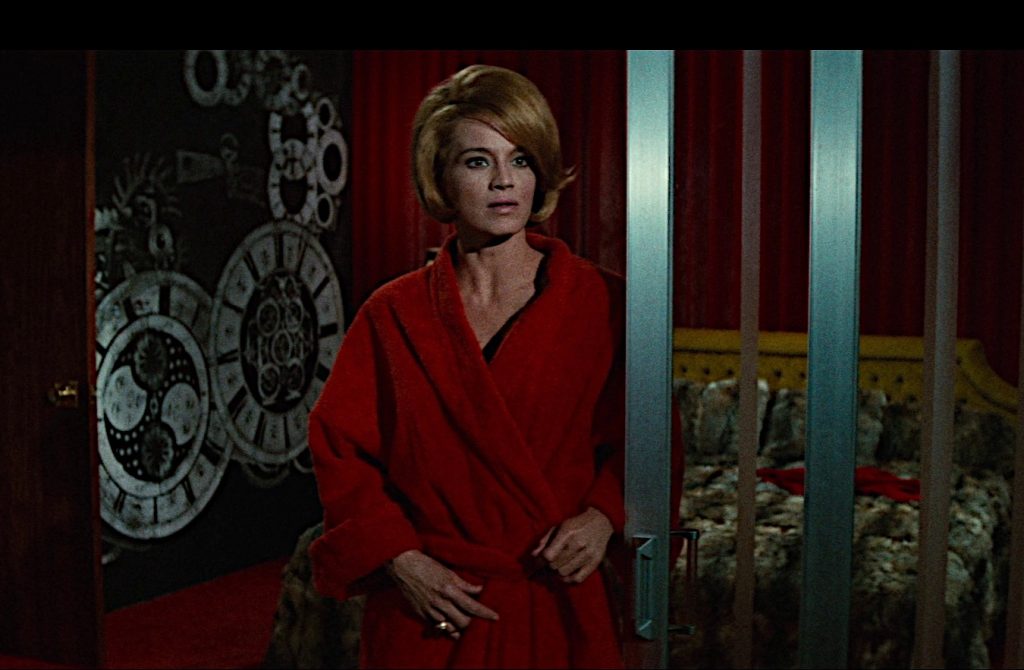
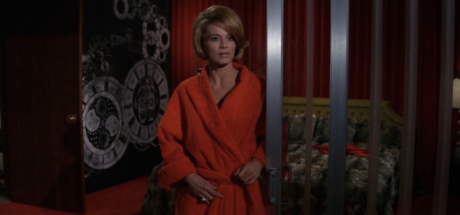
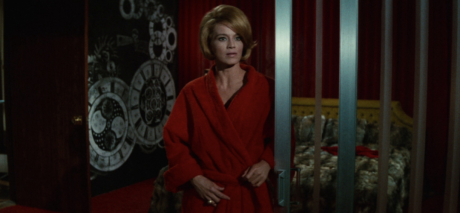
You’ll notice that in Criterion’s forthcoming 4K version of Point Blank (due on 4.21.26), the red-robed Angie Dickinson has an unhealthy pallor — pale, blood-drained, almost ghostly — while the orange-robed Dickinson in the 2015 WHE Bluray has a robust and creamy sun-tanned look.
HE to John Boorman acquaintance who has his contact info: “I want to reach out to Boorman and ask him why oh why he approved Criterion’s teal desecration of his 1967 crime classic. Could you please share his email? Or contact info for his business rep? I’ve respected the man immensely for many decades but I went into a state of cardiac arrest when I saw those DVD Beaver screen captures.”
Boorman acquaintance to HE: “Given Boorman’s current state of health, it doesn’t feel like now is an appropriate time to engage.”
HE to Boorman acquaintance: “You think that my respectfully and submissively asking Boorman why he approved Criterion’s teal-soaked Point Blank…you think that’ll cause the poor guy to have a heart attack?”
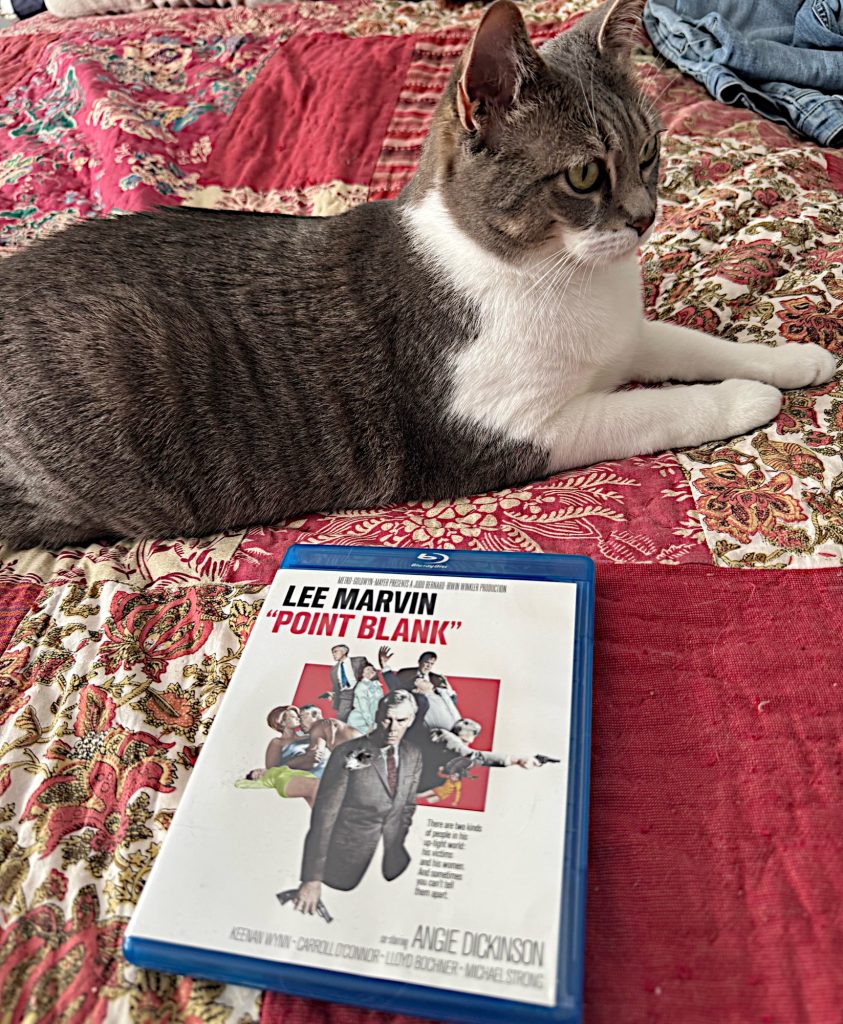
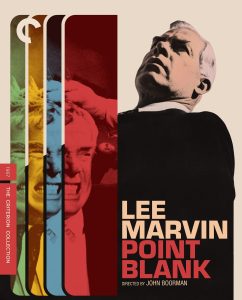
In a recent review, DVD Beaver’s Gary W. Tooze has posted a condemnation of yet another Criterion teal vandalizing, the victim in this case being John Boorman‘s Point Blank (’67) on an upcoming 4K Bluray (due on 4.21.26).
This is par for the course when it comes to the teal gremlins in the employ of Criterion, which has been producing teal-tinted Blurays since 2018 or thereabouts. But the apparent Point Blank ruination is doubly shocking because the forthcoming Bluray (a 4K and a 1080p version are included) has been “approved” by the film’s 93-year-old director John Boorman.
How could Boorman have possibly okayed this**? How could he have surveyed this desecration and said “even though the color grading ignores what this 1967 film, a classic jewel in the crown of my career, has always looked like, the tealish makeover or mauling is…well, it is what it is. Criterion has its own visual take and I will not protest.”
I’ve been looking at Point Blank for many decades (theatrically, cable, DVD, Bluray), and I know what the color grading looks like as well as Boorman does so don’t tell me.
Presuming that the Tooze screen captures are accurate, this is yet another atrocity. Who was (or is) the evil maestro behind the teal tinting? The infamous Lee Kline or some anonymous disciple, some flunky, some Criterion stooge?
From Gary W. Tooze‘s recently posted DVD Beaver review of Criterion’s new Point Blank 4K Bluray (streeting on 4.21.26):
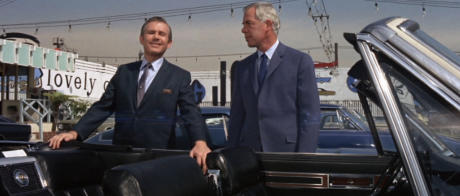
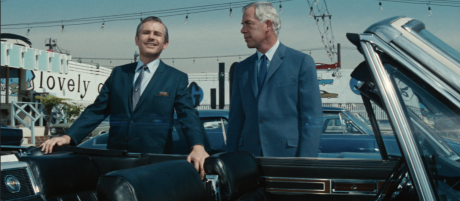
“Unfortunately the Criterion has a noticeable teal-heavy color grade in many scenes. This is part of a long-running complaint about Criterion’s modern 4K restorations, often called the ‘Criterion teal disease’ or ‘teal push’ in home video communities.
“Natural blues, greys, and even some skin tones or concrete surfaces in the film lean noticeably toward cyan/teal-green, which can make the image feel colder and more ‘modern/digital’ than the warmer, more naturalistic (yet still stylized) look of the earlier Warner Bluray or DVD releases.
“Dark blue suits [have turned] light blue and Angie Dickinson‘s orange bathrobe [has turned] deep red.
“[The film] still works cinematically, but color timing is the most divisive aspect of this restoration.”
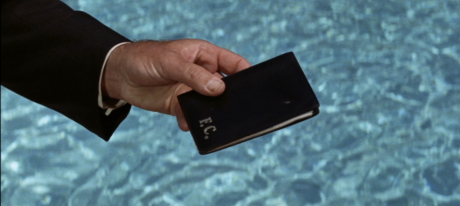
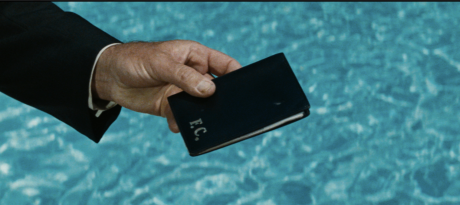
** Presuming, of course, that Tooze’s screen captures are accurate representations.
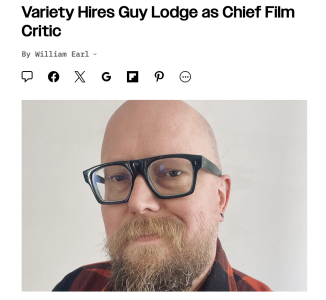
Congrats to the ultra-dweeby Guy Lodge, a longtime Variety stringer and an insightful film nut, upon his hiring as Variety‘s new co-chief film critic, replacing Peter Debruge and now on equal footing with co-honcho Owen Gleiberman.
HE admired and respected Lodge all through the first 15 or so years of this century. We first met 20 or so years ago…drinks in London, Cannes schmoozings, a dinner in Paris, etc. And then Lodge went wokey-woke and snooty-snoot in the late teens. Okay, fine…almost all film critics are woke these days and Lodge, an excellent writer, is no different. But he can also be, to be fair, a reasonably supple mainstream guy on occasion.
12 years ago I was delighted by Lodge’s praise for Olivier Assayas‘ Personal Shopper: “Among the many things that appear to be on Assayas’s mind is the disembodied — and disembodying — nature of modern-day communication and social media, which makes ghosts of us all to those with whom we text far more than we talk. Perhaps no film has ever made the mobile phone quite such an instrument of tension: the on-screen iPhone ellipsis of an incoming message takes on a breath-halting urgency here. No more should be revealed about the film’s gliding, glassy sashay through multiple, splintered genres and levels of consciousness – except to say that Assayas, working in the high-concept, game-playing vein of his Irma Vep and demonlover, is in shivery control of it all.”
Three or four years later the woke virus began to manifest, and Lodge was infected along with the rest. A certain tone of dutiful cult servitude began to settle in.
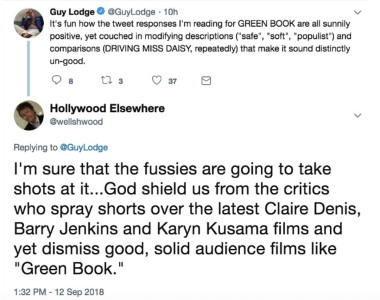
From “A Fifth Body Snatchers is Required“, posted on 1.9.18: “Friends and family members of seed-pod film critics have begun to notice a certain robotic manner and a glassy, out-to-lunch look in their eyes. Local constable: “But he looks like his picture, madam. Obviously he’s Guy Lodge, the Variety critic.” Mrs. Lodge: “But it isn’t him, I’m telling you. Something is missing. It’s just not Guy!”
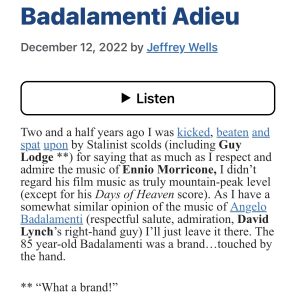
Posted three and a half years ago:
Posted on 12.7.25: “Variety’s Guy Lodge, the bespectacled king of the Cannes filmcrit dweebs, has totally raved about Mascha Schilinski’s Sound of Falling. I respect Lodge’s willingness to drop to his knees and kowtow to a feminist filmmaker who has the chutzpah to subject viewers to a drip-drip gloom virus, but at the same time I think he’s either left the planet or had simply decided to praise this fairly infuriating film no matter what.”
Who could have foreseen on 2.1.26 that the missing and presumed-kidnapped Nancy Guthrie, beloved mom of TODAY‘s Savannah Guthrie, would still be missing nine weeks later, and that the Tuscon fuzz and the FBI still wouldn’t have clue #1 as to what exactly happened or where she is or anything?
I wonder if any of the principals involved have seen or even heard of Peter Weir‘s Picnic at Hanging Rock?
Two more ransom notes have been reported by TMZ, only they aren’t about where Nancy Guthrie may or may not be — it’s about where her body is. The first note, received on Monday, says “she is dead.”
TMZ’s Harvey Levin: “We got another letter today from this person, an email saying ‘I know where her body is, and who the kidnapper is…give me half a bitcoin and I’ll tell you.'”
13 years expired between the 12.18.09 debut of James Cameron‘s Avatar and his aquatic follow-up, Avatar: The Way of Water, which opened on 12.16.22. A long wait.
But that’s nothing compared to the 20 year gap between David Frankel‘s The Devil Wears Prada and The Devil Wears Prada 2, which opens on 5.1.26 — a mere 3 and 1/2 weeks hence.
Everyone, of course, is 20 years older. Way back in ’06 Meryl Streep was 56 or 57, Anne Hathaway was 24, Emily Blunt was 23, Stanley Tucci was 56, etc. And the material is…well, who knows if it’s dated or not? But the concept certainly is.
Will there be any references to deranged fashion industry wokeism, which is apparently ebbing as we speak. Will anyone mention the mercifully brief vogue of plus-sized women in underwear and fragrance ads? Will the film allow a glimpse of any trans runway models? The only portion I’m really looking forward to is the Milan footage.
And no serving of 21st Century filmmaking has looked or sounded better than this. As good as here and there, but none better.
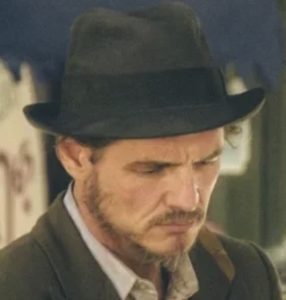
In Todd Haynes’ 1930s-era De Noche, which is currently filming in Mexico, Pedro Pascal plays a gay Los Angeles detective who falls in love with a younger hunky teacher with dark watery eyes (Danny Ramirez) and hoo boy, the cock-and-balls-and-sweaty-scrotum action is hot and unceasing…
We’re talking donkey dicks, gross animal members, rim jobs, hum jobs, hand jobs, fisting, blowjobs, slippery ass jobs, golden showers, squish jobs, jobby-type jobs…dick dick dick dick dick dick dick dick dick dick dick dick dick dick, etc.
They decide to leave for Mexico for more of the same with some tortillas and sautéed shrimp and a little tequila and lime on the side.
Except hardboiled L.A. detectives never walked around with chin whiskers and neck-beard growth. You can come up with any bullshit grooming fantasy that floats your boat, but detectives didn’t grow chin beards in the mid to late 1930s.
They just didn’t, and THAT’S THAT. Ask Jake Gittes or Roman Polanski or John Huston.


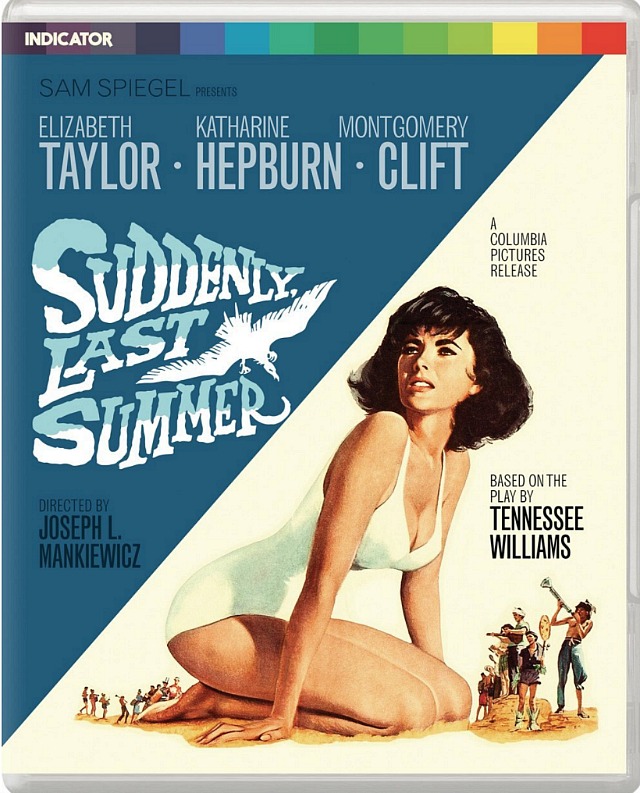
Last night’s Suddenly, Last Summer Facebook commentary (Dale Launer, Rick Segreda, Meredith Brody, myself):
I’ve tried watching Suddenly, Last Summer twice, and have failed — given up — both times. I couldn’t handle the bulk of it, I mean. The interminable middle section. Yes, I’ve seen the powerful finale (an anguished Elizabeth Taylor recalling her memory of cousin Sebastian’s grotesque death), but I could never shake the feeling that this Joseph L. Mankiewicz film was psychologically diseased, and that the disease was somehow catching.
Before my second viewing (streaming) I told myself “shake off your negative attitudes and show respect for these people…Mank, Tennessee Williams, Taylor, Katharine Hepburn, Montgomery Clift, Gore Vidal.” But it once again made me feel oppressed and infected.
Oh, and the predatory “street urchins” were straight out of William S. Burroughs’ “The Wild Boys.” Dirt-poor, dark-complexioned street cannibals with boners. And they don’t really “eat” Sebastian whole. They eat portions, cutlets.
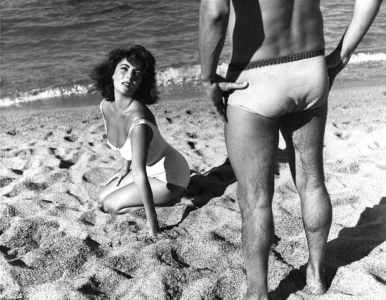
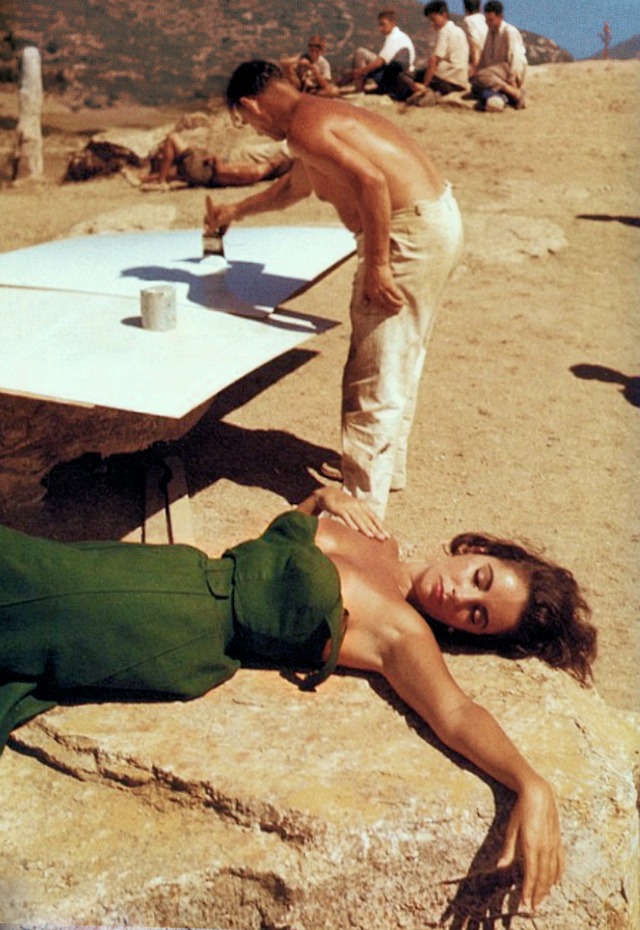
Posted on 2.14.18: Joseph Mankiewicz‘s Suddenly Last Summer is good for one thing — the stills of 27 year-old Elizabeth Taylor that were taken during filming.
She was still slender back then, or a couple of years away from that Cleopatra-era plumpness (heavy drinking + pasta) that began to overtake her features in ’61. Taylor was always a well-respected actress (Giant, Cat on a Hot Tin Roof, Butterfield 8), but she always seemed to be conspicuously “acting.” I always found her voice shrill and grating on some level, especially when called upon to show anger or outrage and emotional distress. But from the early to late ’50s she was quite the visual package.
Suddenly Last Summer ends with a shocking revelation about Taylor’s mentally unstable character having witnessed her gay cousin, Sebastian Venable, being eaten alive — cannibalized — by a pack of feral young boys.
The bizarre finale was obviously intended as some kind of metaphorical condemnation of gay sexuality. Sebastian’s rich mother (Katharine Hepburn) is so appalled and disgusted by suspicions of Sebastian’s lifestyle that she wants Taylor lobotomized in order to suppress any notion that the cannibal incident happened. It’s quite ugly and joyless, this film. Rage, repression, self-loathing.
From Wikipage: “Following A Streetcar Named Desire (’51) and Cat on a Hot Tin Roof (’58), Suddenly, Last Summer was the third Williams film that dealt with the subject of homosexuality, although it was far more explicit in its treatment than either of the previous films were allowed to be under the Motion Picture Production Code.
“Working in conjunction with the National Legion of Decency, the Production Code Administration gave the filmmakers special dispensation to depict Sebastian Venable, declaring, ‘Since the film illustrates the horrors of such a lifestyle, it can be considered moral in theme even though it deals with sexual perversion.”
“The horrors of such a lifestyle”! No wonder Tennessee Williams disavowed any direct participation, even though it was based on a 1958 one-act play he’d written for an off-Broadway venue. The play was adapted for the screen by Gore Vidal.

If Trump wanted to convey fierce disrespect or acidic disdain, the more appropriate “bastards”’ adjectives would have been “despicable” “godless”, “reptilian”, “seething”, “self-destructive”, etc.
“Crazy bastards” means “eccentric nutters with a genius scheme, or at least one I didn’t see coming”. Crazy as in wily, foxy, deceptive.

We all know what aggressive, spirit-throttling film scores sound like, and there are certainly many great ones in this vein. I could go ond on.
But what exactly constitutes a quiet film score? David Shire‘s score for All The President’s Man is an exquisite example. It’s all about antsy moods, suspicions, anxiety, uncertainties, undercurrents. I think it’s masterful — perhaps the best of its kind.
Which scores are Shire’s keenest competitors? The ones for Moneyball, Drive and Twelve Angry Men, certainly. Which others?